Natural history
Snowy Plover recovery information from Point Reyes Bird Observatory
Coal Oil Point Reserve — 2003 and 2004
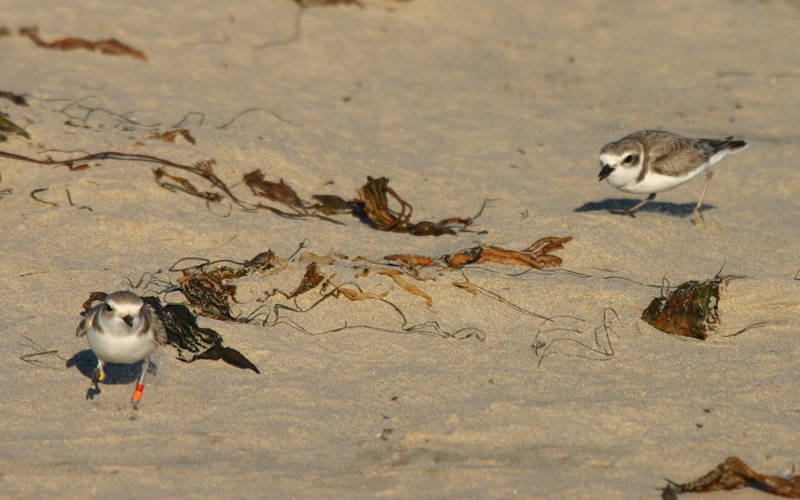
Snowy Plover recovery information from Point Reyes Bird Observatory
Snowy Plover band information (Word document)
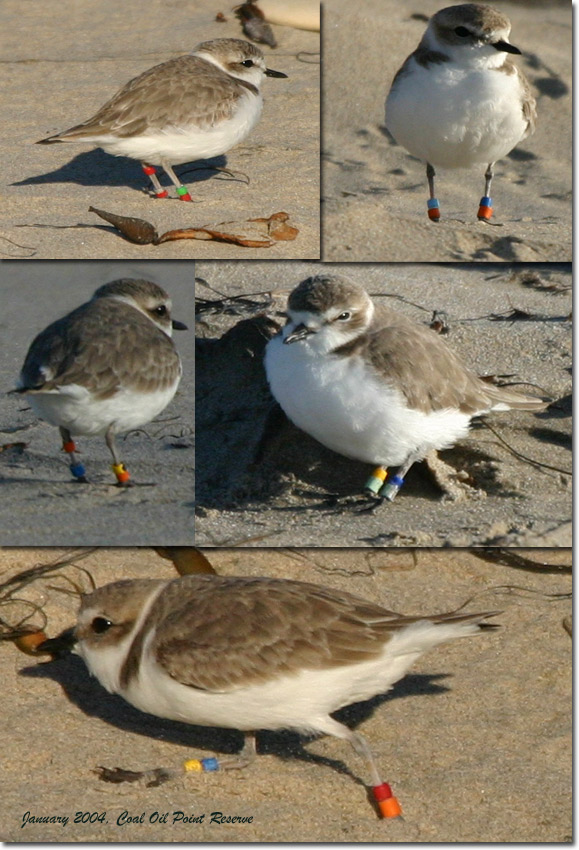
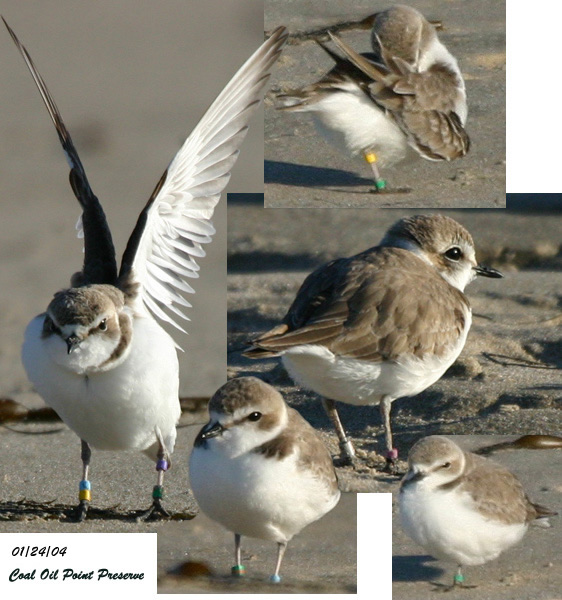
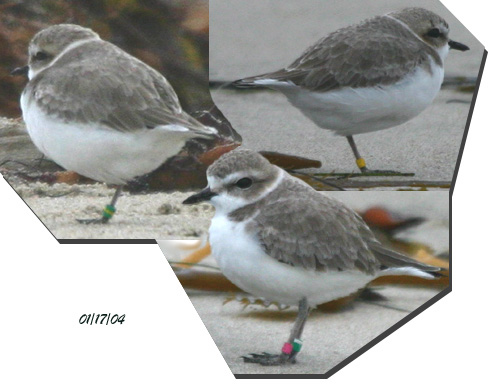
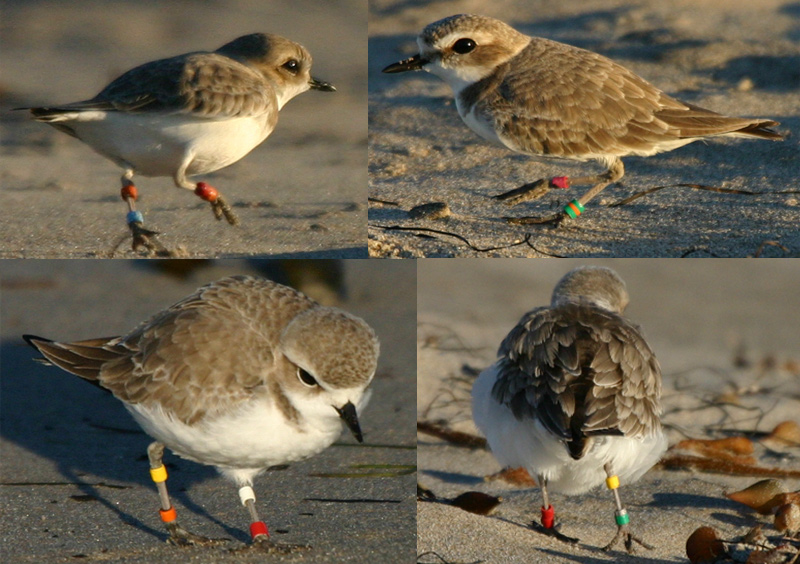
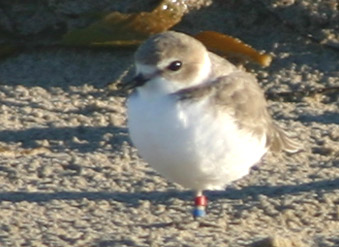
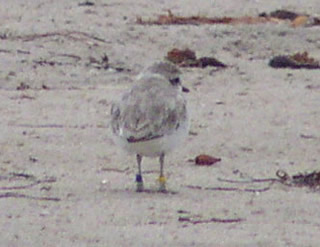
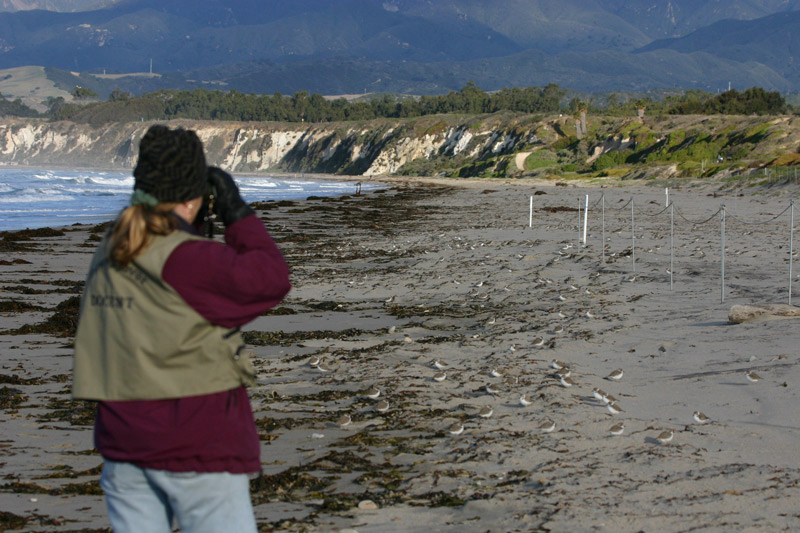
Note: This is an older letter from Cris regarding plover banding.
Dear folks,
I hope you had a good holiday break. My family was here and I had a great time. Thank you all who were able to come to the Reserve during the holidays. I know this time is especially difficult for most of you.
I am sending you a Word table with information about the plovers that are banded and observed at Coal Oil Point Reserve. I update this table once a week, so I will send you the latest table once in a while.
Melissa Kelly, who is a docent on Sundays at daybreak, is the official volunteer for Point Reyes Bird Observatory (PRBO). She is doing an amazing job recording plover bands and counting them about once a week. I then send this information to PRBO and they send me back information about the origin of the banded plovers. PRBO has a huge database to track the movement of various bird species. With this information, they can watch for declines, trends, and other changes.
The movement of plovers between inland and coastal areas was essential information in determining that inland and coastal birds were separate populations that did not mix during the breeding season. It is because of this information that the coastal population of Snowy Plovers was listed as threatened. When a group of people petitioned the U.S. Fish and Wildlife Service (USFWS) for the plovers to be delisted, I was able to use the banding information to show that they are indeed separate populations.
How can you use this information for the Reserve? The number of plovers from different locations observed at COPR may only represent the banding effort at those locations. With the information in the attached table, all we know are possible locations where our plovers come from. Few plovers from the south may only mean that plovers are not being banded in the south. We can say that our plovers are coming from various locations. This year, we even have a plover from Oregon.
Are we going to band plovers at COPR? Probably not. COPR has problems with predation from visually oriented predators such as crows. The bands are brightly colored and may increase the predation risk to young chicks.
Where do the plovers that breed at the Reserve come from? Nobody knows because the plovers that have bred here were not banded. We know from other well-studied areas that 60% of the plovers return to the site where they were born to breed in their first year. Thanks to the 40% that are more adventurous, we had plovers breeding here in 2002 after 30 years of no breeding. In 2004, it is likely that most of our breeding pairs will be chicks born and raised at COPR. I wonder if these pairs will be as tame as the chicks were.
Breeding will start at the end of March. We should start a new pool to see who guesses the right number of chicks for 2004.
All the best to all of you.
Cris
Cristina Sandoval, Ph.D.
Coal Oil Point Reserve Director
Marine Science Institute
University of California
Santa Barbara, CA 93106-9610
Phone: (805) 893-5092
Fax: (805) 893-8062