Mexico 2025, Part Two
December 12–18 · Road Scholar’s The Best of Central Mexico: Magical Towns and Bustling Cities
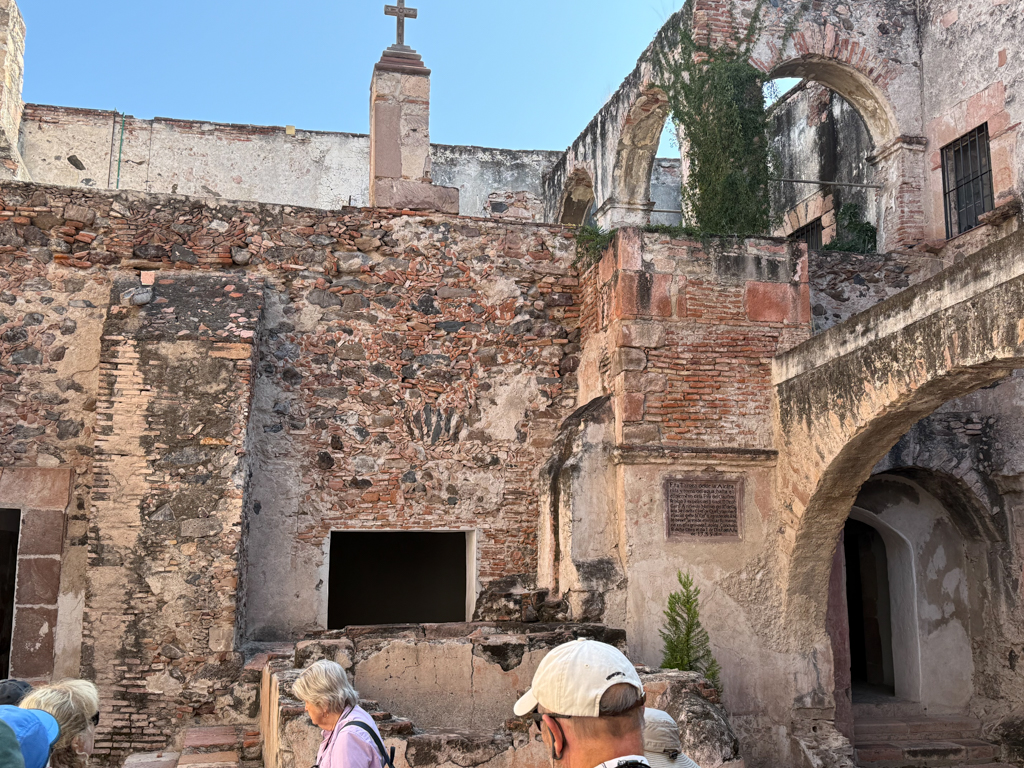
December 12, 2025 — Convento de la Santa Cruz and Aqueduct at Querétaro, Templo de Santa Clara de Asís, Templo y Exconvento de San Francisco de Asís, and the historic downtown
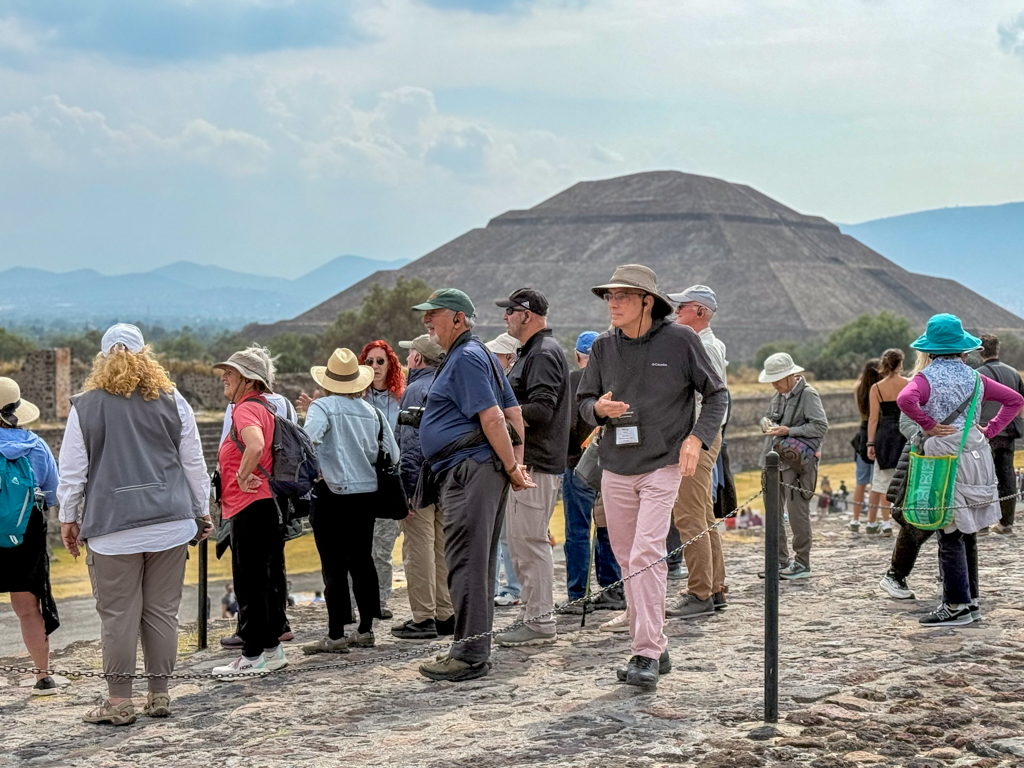
Teotihuacan is more than just pyramids; it is an entire city. In addition to the three great pyramids, there were a little more than two thousand residential complexes in which the ancient Teotihuacan civilization developed. Behind Pirámide de la Luna, framing it, stands the imposing mountain now known as Cerro Gordo, which in the 16th century was known as Tenam, "the mother." It is a volcano that erupted approximately 300,000 years ago and whose lava flow covered the entire valley with incandescent material that, when cooled, created a lithification process; that is, it turned to stone (basalt and tezontle) with which the population built this enormous city. (from educational sign at the site)
December 13, 2025 — Teotihuacan, then from Teotihuacan to Puebla, the capital of the state of Puebla, Mexico.
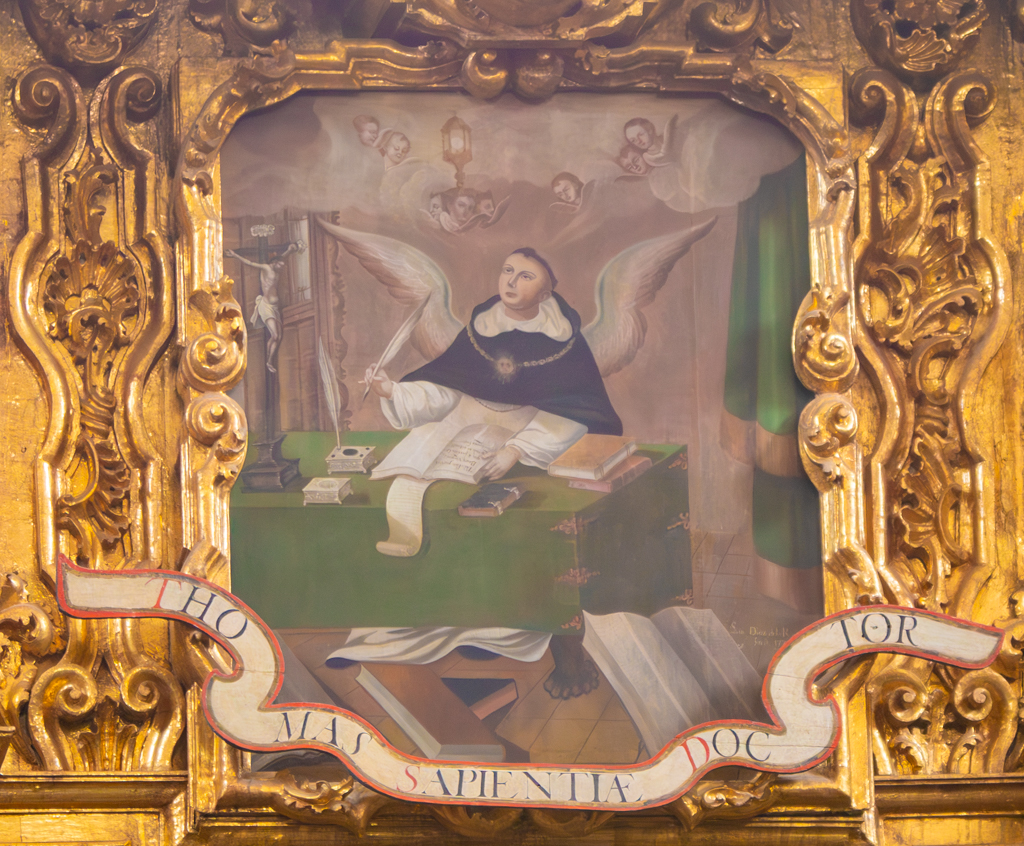
The oldest public library in the Americas is the Palafoxiana Library (Biblioteca Palafoxiana) in Puebla, Mexico, founded in 1646 by the then-bishop of Puebla, Juan de Palafox y Mendoza, to house his book collection. The beautiful hall of the library was finished in 1773. The library currently holds more than 41,000 items, including nine incunabula, among them a 1473 edition of the Histories of Herodotus.
December 14, 2025 — Palafoxiana Library
"Irregular," "extravagant," "uneven." This is how the dictionary of the French Academy of 1740 described the term baroque to negatively refer to an art form that was seen as having broken with the aesthetic norms of Greco-Roman Antiquity and the Renaissance. From this perspective works produced between the late sixteenth century and the final decades of the eighteenth seemed so exaggerated and bizarre that they were identified with an imperfect pearl known as a pérola barroca in Portuguese. (From an educational sign at the Museo Internacional del Barroco (MIB) in Puebla, Mexico.)
International Museum of the Baroque
San Francisco Acatepec Temple. The town is fifteen minutes from Puebla, the state capital. The Christian name “San Francisco” honors its patron saint and the Franciscan religious order, whose members evangelized the area’s ancient inhabitants and participated in constructing the temple. The name “Acatepec” comes from its location on the “Cerro de los carrizos.”
The property’s architecture confirms that it is a Franciscan building whose construction began around 1560. The main part of its architectural plan dates from the second half of the 16th century and the 17th century, while its façade was completed around 1760. The temple has a Latin-cross plan and a spacious atrium. Like other Franciscan complexes, it has three entrances. The earlier main entrance has a multilobed arch that served not only an ornamental function but also as an open chapel and sacred gathering place. Burials took place there during the 16th and 17th centuries, and some burial sites remain visible today.
The church façade is decorated in the Mexican Baroque style. Its ornamentation, created during the golden age of Puebla Baroque and Talavera between 1650 and 1750, makes it one of the most beautiful façades of its type in Mexico. Carved and polychromed to resemble an altarpiece, it consists of two sections and a finish with volutes. Flame-shaped details on the belfry and tower resemble fine pastries. Solomonic columns define the Baroque style of the tower, while Churrigueresque details appear in the second section and finish. Most remarkable are the multicolored Talavera mosaics made especially for the church, giving the façade the appearance of a porcelain temple worthy of a glass case.
The temple’s interior is equally remarkable. Its decoration is astonishing in the density and brilliance of its forms, with plasterwork and Baroque altarpieces like those in the Tonantzintla temple. This decoration was recreated after a fire damaged the temple in 1939. Restorers used ornamentation resembling the originals, although some iconography changed. (Adapted from a sign at the site.)
Templo De San Francisco Acatepec, Church of Santa María Tonantzintla, and Around the town of Puebla, Puebla, Mexico
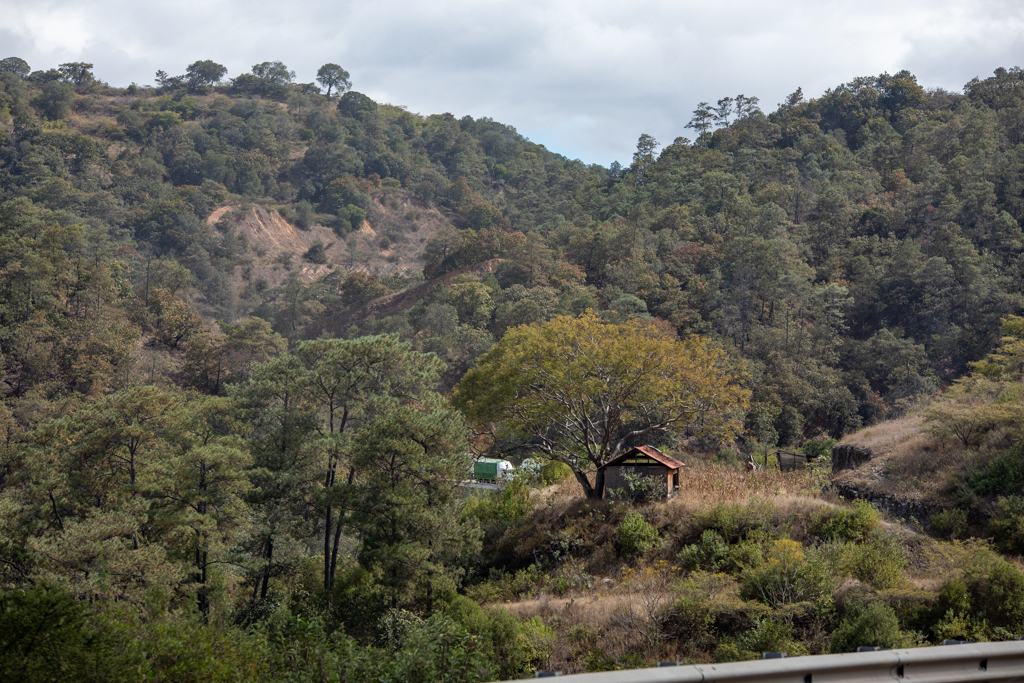
December 15, 2025 — From Puebla to Oaxaca
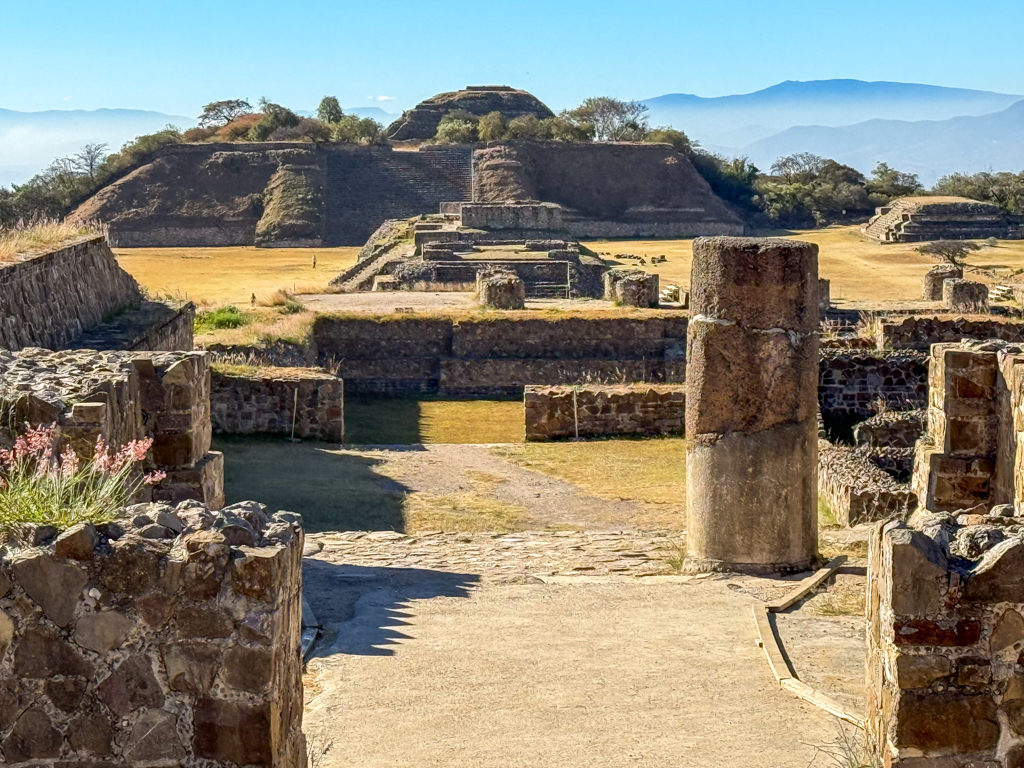
Since ancient times, the Valley of Oaxaca has been inhabited and has constituted an important cultural area; at least 16 ethnic and linguistic groups lived in Oaxaca in the late pre-Hispanic era. The ancient city of Monte Albán was one of the main pre-Hispanic settlements in Mesoamerica for thirteen centuries, between 500 B.C. and A.D. 800; Zapotec culture flourished here. The archaeological zone extends across 20 square kilometers and covers three large hills: Monte Albán itself, Atzompa to the northwest, and El Gallo between them. The area of intensive pre-Hispanic occupation covers more than 6.5 square kilometers. The entire zone has sets of large structures—Cerro Atzompa, El Gallo, El Paragüito, Monte Albán Chico, El Pitahayo, and El Plumaje—but the Main Plaza of Monte Albán is the focal point of this zone. (From an educational sign in the museum at the site.)
December 16, 2025 — Monte Albán, Oaxaca, and Convent of Santo Domingo de Guzmán, Cultural Center, and Oaxaca Ethnobotanical Garden
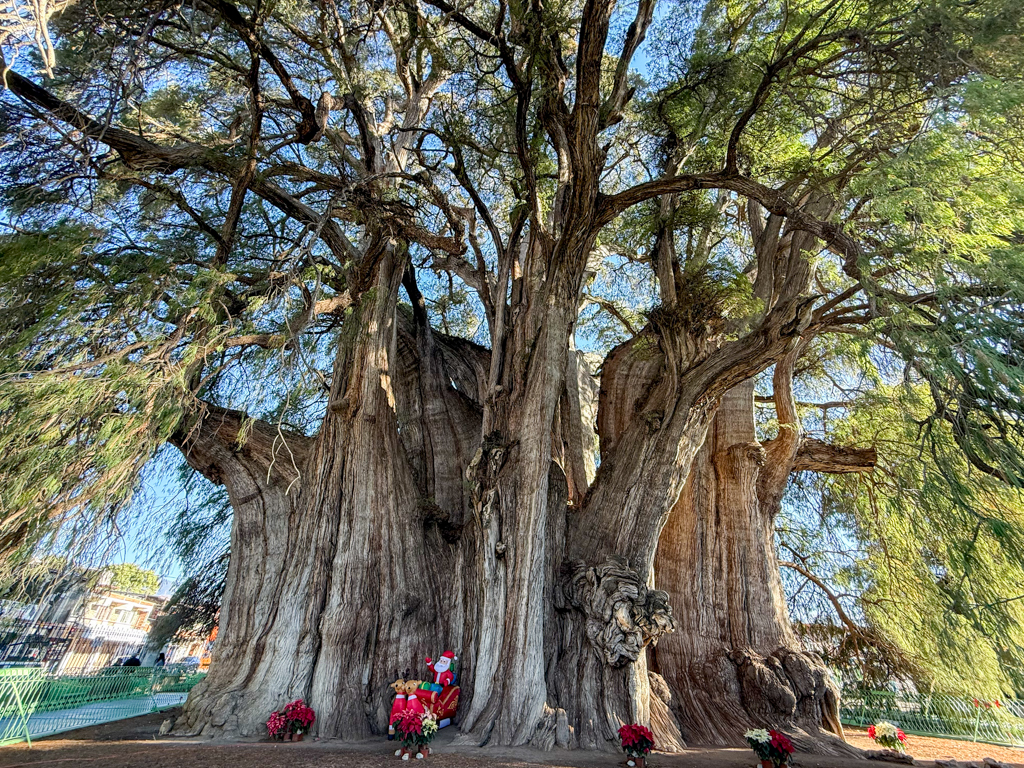
El Árbol del Tule (Spanish for The Tree of Tule) is a tree located in the church grounds in the town center of Santa María del Tule in the Mexican state of Oaxaca. It is a Montezuma cypress (Taxodium mucronatum), or ahuehuete (meaning "old man of the water" in Nahuatl). It has the largest tree trunk in the world. The tree is occasionally nicknamed the “Tree of Life” because of the images of animals that are reputedly visible in the tree’s gnarled trunk.
December 17, 2025 — Árbol del Tule, and Oaxaca countryside, textile workshop, and cooking

December 18, 2025 — Oaxaca to San Francisco via Houston, Texas